
The conversation around 50-year mortgages is heating up, especially here in Rhode Island where home prices continue to rise and affordability is a real challenge. I understand why these long-term loans seem tempting. After all lower monthly payments feel like immediate relief.
But as a real estate professional who cares deeply about your future, I want to be very clear:
A 50-year Mortgage Isn’t Financial Relief It’s a Financial Trap
Below, I break down the real numbers, the long-term risks, and why Rhode Island buyers should think twice before choosing this type of loan.
Why Buyers Are Even Considering 50-Year Mortgages
Rhode Island has seen:
- High demand and low inventory
- Rapid appreciation in areas like Cranston, Warwick, Providence, and East Greenwich
- Rising interest rates
- Competition with investors and out-of-state buyers
So when a lender says:
“We can cut your payment by $300+ a month if you stretch the loan to 50 years…”
It sounds like a win.
But let’s look at the actual math.
Payment Comparison: 30-Year vs 50-Year (Based on a $500,000 Mortgage)
Assuming 6.5% interest for both loans (for simple comparison):
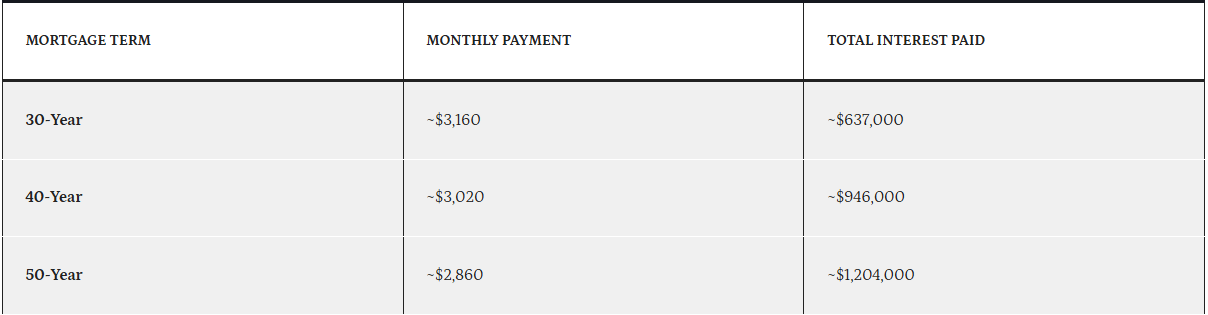
Monthly Savings Going From 30 → 50 Years: About $300
Extra Interest Paid Over 50 Years: Over $560,000
You save $300 a month now.
But you pay over half a million dollars more in the long run.
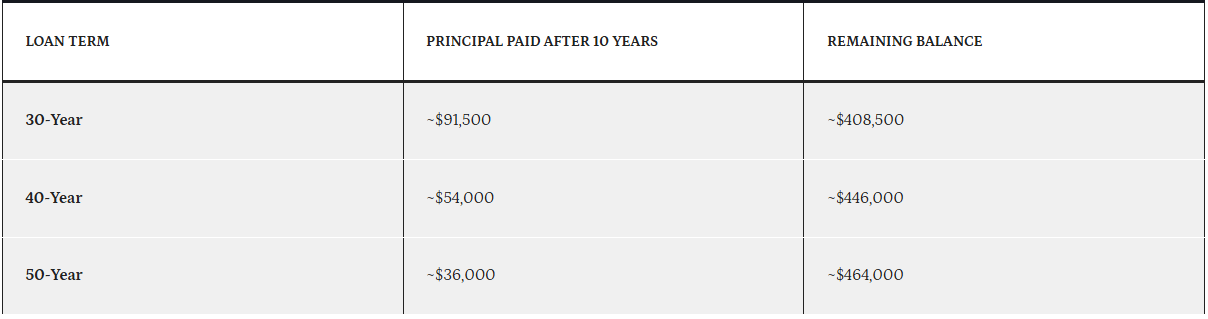
What You Actually Pay Down After 10 Years
Here’s where things get alarming.
Amount of Principal Paid Off After 10 Years:
With a 50-year Mortgage:
- You’ve paid mostly interest for 10 entire years
- You’ve barely chipped away at the loan
- You could easily be upside down if the market softens
- You cannot refinance easily
- You’re stuck with the payment and the house
This is why these mortgages are so risky.
The Retirement Problem: You’re Still Paying at 70+
If you buy at age 30, your payoff ages are:
- 30-year loan: Paid off at 60
- 40-year loan: Paid off at 70
- 50-year loan: Paid off at 80
Most people retire around 67.
And most people RELY on having a paid-off house to lower their expenses.
With a 50-year mortgage, you enter retirement with one of the largest bills of your life still due.
So while your income goes down.
Your cost of living stays the same.
This threatens:
- Retirement planning
- Savings
- Healthcare expenses
- Overall stability
It’s the opposite of financial security.
And Yes — Banks Make a Fortune
This is why they’re pushing these products.
- With a 30-year mortgage, they earn interest for 360 payments.
- With a 50-year mortgage, they earn interest for 600 payments.
The longer the loan,
the more profit for the bank
and the less wealth the homeowner builds.
50-Year Mortgage: What You Really Get
Lower Payment Now
- Around $300/month savings
Nearly No Equity for the First 10–15 Years
- Mostly interest payments
You’re Still Paying at 70–80 Years Old
- Huge risk in retirement
Over $560,000 Extra Interest Over the Life of the Loan
- Wealth lost forever
Much Higher Risk of Being Underwater
- Hard to sell
- Hard to refinance
- Hard to move
Extremely Profitable for Banks, Not For You
Better Options for Rhode Island Buyers
There are safer, smarter alternatives:
1. Down Payment Assistance Programs (RI Housing)
Includes:
- FirstGen
- Extra Assistance
- 10kDPA
- First-time buyer incentives
2. A 2-1 Buydown
Lower your rate by 2% in year one, 1% in year two.
3. Improving Credit to Secure a Better Rate
4. Expanding Your Search Radius
Warwick, West Warwick, Pawtucket, Cumberland, Lincoln, Johnston, and parts of Cranston offer more affordability than places like East Greenwich and Barrington.
5. Considering a Smaller Starter Home
6. Waiting 6–12 Months to Strengthen Savings
These options help you own a home without sacrificing your future.
My Commitment to You
As your Rhode Island real estate guide, I’m here to help you make choices that support your long-term stability and goals, not just get you into a house today.
A 50-year mortgage may feel like a shortcut, but in reality, it’s a long road filled with unnecessary risks, extra interest, and long-term financial strain.
If you’d like to see a personalized amortization schedule or compare mortgage options based on your income and credit, I’m happy to walk through the numbers with you.
Your home should build your wealth, not delay it for 50 years.